Researched
Thirty years, sixteen editions, one valley
Boom runs every second year on a reservoir shore in the Beira Baixa. What that shore actually is, and how a festival came to own it.

Boom Festival 2027 runs from 18 to 25 July at Herdade da Granja, in the municipality of Idanha-a-Nova, Castelo Branco district, central Portugal. It is the sixteenth edition and it falls on the thirtieth year since the first one.
The site is not a field somebody hires. The organisers bought the estate — roughly 150 hectares they call Boomland — on 28 September 2016, and that single fact explains most of what the place looks like. Infrastructure that would be dismantled on rented ground stays. Planting survives between editions. A festival that owns its own valley behaves differently from one that has to hand it back.
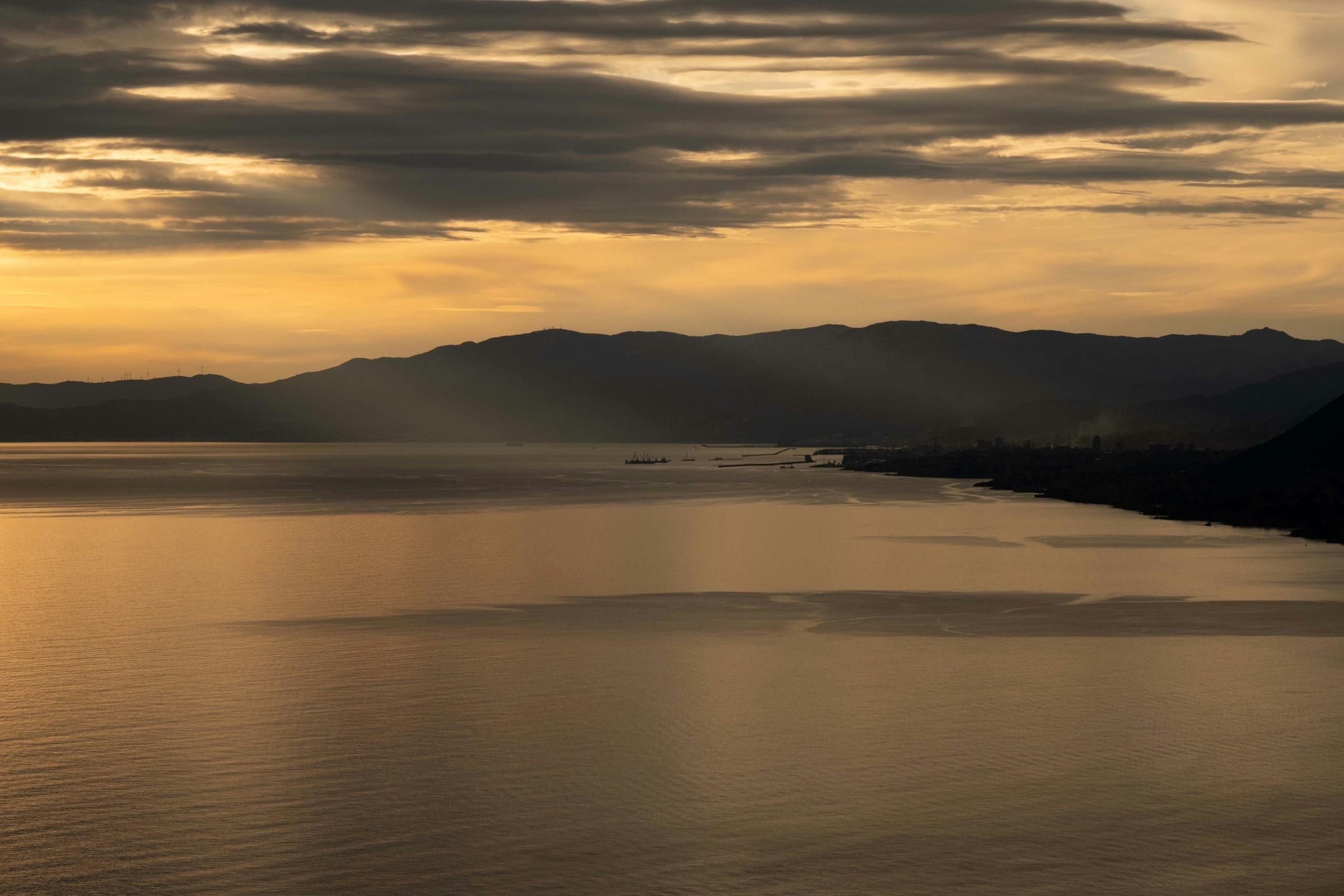
The water is the point. The festival sits on the shore of the Marechal Carmona reservoir, held back by a gravity dam on the river Ponsul that is 44 metres high and began filling in 1946. Its full storage level is 255.5 metres above sea level and it holds 78 hectometres cubed. It also, in the phrase local histories use, separated the two Idanhas — Nova and Velha — which had faced each other across a valley for centuries.
That matters to anyone standing there in July. The shoreline in high summer is not where the map says it is: the reservoir is drawn down for irrigation, so the water sits below its mapped line and the margin between the last grass and the first wave is wider than it looks on any satellite image.
The ground climbs east. From the shore at around 246 metres, the land rises to about 326 metres roughly 1.2 kilometres inland — around 80 metres of climb, with the steepest pitch somewhere near 17 per cent. The festival grounds measure about 1.7 kilometres north to south and 1.4 east to west. Water on the west, dry ground rising to the east: that is the site, and it is the reason everyone who has been describes the walking before they describe the music.
What is nearby. Idanha-a-Velha, a Roman and Visigothic settlement that Boom's own guide places a couple of kilometres away, is one of the oldest continuously inhabited sites in Portugal. Monsanto sits about 18 kilometres off, Penha Garcia around 30. All of it is inside the UNESCO Global Geopark Naturtejo. It is a genuinely remarkable corner of Europe that happens, once every two years, to have a festival in it.
The dam is about 3.5 kilometres from the site, bearing south-south-west. The town of Idanha-a-Nova is 7.4 kilometres away on the far side of the water. Neither is walkable in July, and neither needs to be.
“The organisers did not rent the land. In September 2016 they bought it — which is why the trees planted after one edition are still there at the next.”